Planning to experience a Botswana safari this year? Firstly, congratulations! it’s an exciting experience that you will not forget. Secondly, it’s important to consider exactly when you want to go.
This is because unlike a traditional landscape, Botswana is special. The time of year you visit literally shapes how the days unfold in the bush; from how the landscape looks to how the wildlife acts and responds to the surroundings. This in turn dictates your safari experience.
To break things down, Botswana’s year is generally shaped by two very different seasons:
- The green season: This is defined by summer rains, fresh growth, scattered water, and a sense of abundance across the landscape.
- The dry season: Dry season is known water becoming limited, vegetation thinning, and movement across the bush beginning to follow clearer rules.
The dry season is often spoken about as a defining period for visitors as the underlying ecological patterns become increasingly visible with wildlife movement becoming easier to follow.
Yet the dry season is rarely explained beyond a set of dates or a simple recommendation. Our guide aims to rectify this, diving closer at just how Botswana transforms during the dry season and why that transformation shapes the unique way safaris are experienced across the year.
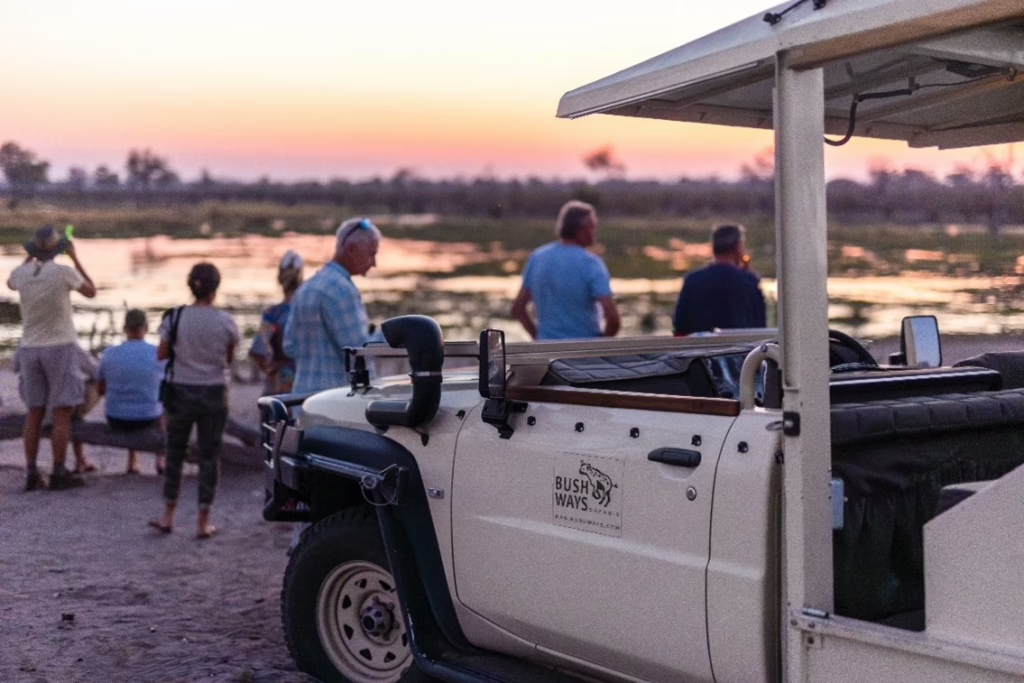
What is the Dry Season in Botswana and How Does It Develop?
With this in mind, what exactly is the dry season and when does it occur in the year?
The dry season in Botswana typically spans May to October, beginning soon after the end of the summer rains of the green season. As the name suggests, rainfall largely disappears over this period, days become sunnier and humidity drops noticeably, particularly in the mornings and evenings.
How the Dry Season Reshapes the Land
Given the drop in surface water after the end of the green season, shallow pans and seasonal floodplains begin to dry out, this is followed by temporary channels such as the Savuti Channel. While most of the water dries up, areas such as Chobe River and the Okavango Delta contain deeper waterways that continue to hold water long into the dry months.
What’s more, without the water levels see in the green season, vegetation growth halts, grasses shorten and the bush opens. The result? A landscape that feels leaner and more authentically transparent for those looking to immerse into the untouched nature of Botswana.
The visual shift from green to dry is gradual but unmistakable. Lush vegetation gives way to softer earth tones, and floodplains open up into wide, unobstructed spaces. Tree lines stand out more clearly, and the scale of the landscape becomes more pronounced. The dry air brings clear skies and strong, clean light. Early mornings and late afternoons are particularly striking, with long shadows and crisp horizons.
The beauty of this? These seasonal landscape changes act as an anchor for the changes you experience within the bush itself. You get a completely unique viewpoint of the bush from a safari depending on when you visit.
Wildlife During the Dry Season
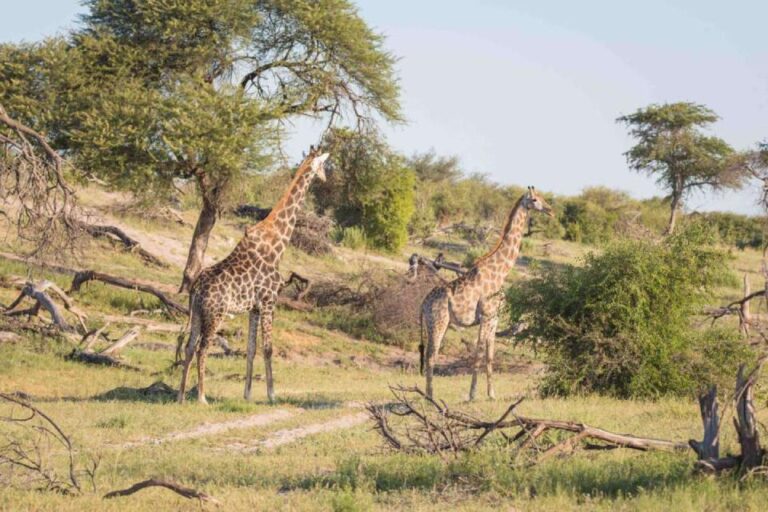
With fewer plants and trees to provide cover and less individual sources of water to drink, the local wildlife naturally changes and adapts their behaviour to the landscape. For those experiencing Botswana in the dry season, animals become increasingly visible, but they also adjust how and where they move.
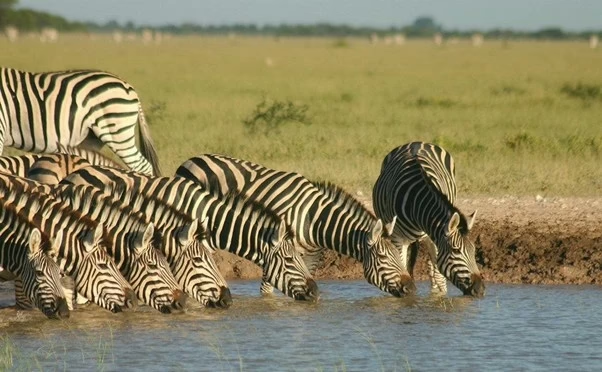
Herds and solitary animals in the area gravitate toward reliable water sources, often following the same routes day after day. This concentration doesn’t remove the element of surprise from safari, but it does make wildlife behaviour more predictable and easier to understand.
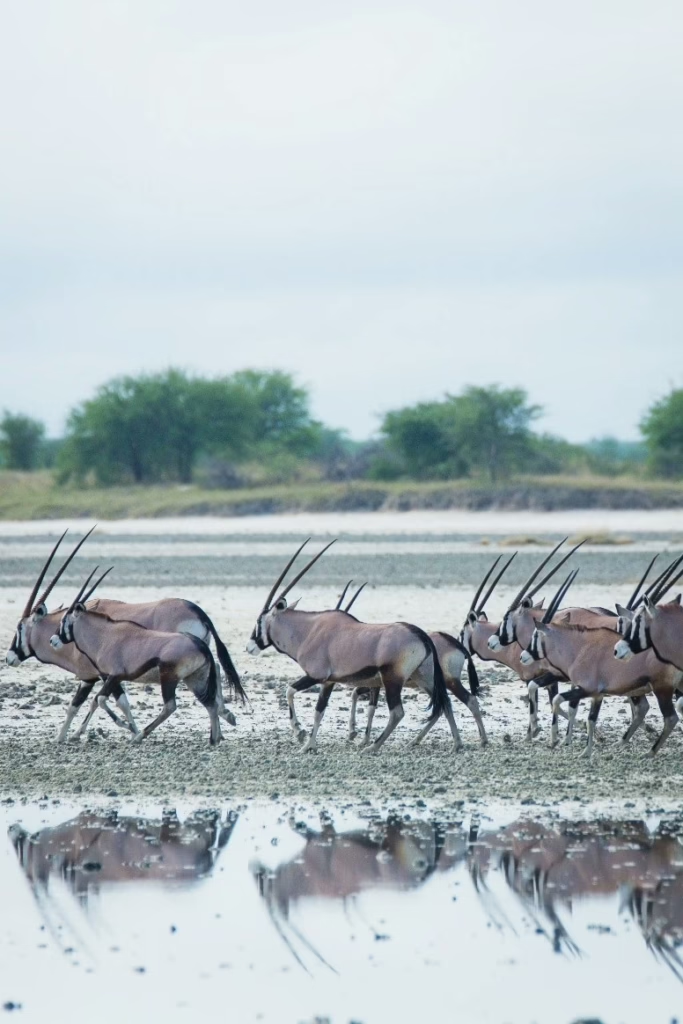
Herbivores also tend to spend more time in open areas close to water, where grazing is still possible and predators are easier to detect at a distance.
Predators take advantage of these conditions as well. Shorter grasses improve visibility, and cooler temperatures – particularly earlier in the season – often leading to increased daytime activity. Interactions between predator and prey are more exposed, offering insight into how animals adapt to the changing environment.
For those on safari, the dry season often feels more deliberate. Sightings last longer, and time is spent observing rather than searching, allowing a deeper appreciation of behaviour and movement.
Popular Safari Experiences During Dry Season
Rather than trying to cover as much ground as possible, dry season safaris often focus on fewer areas in greater depth. Time is spent watching how animals interact with water sources, respond to each other, and move through an increasingly open environment. Just some of the Botswana Safaris that work well with the dry season landscapes are:
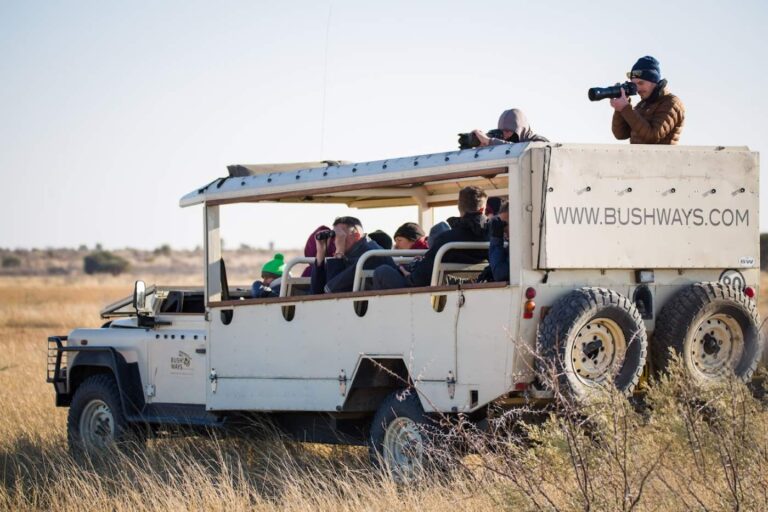
Game drives: Rivers, channels, and waterholes become natural gathering points during the dry months. Game drives that concentrate on these areas often result in longer authentic sightings, as animals return repeatedly to drink and rest nearby.
Walking safaris: A key difference of dry season is that the ground preserves tracks, droppings, and signs far more clearly than wet conditions. This makes the season well-tailored for walking, as our guides can interpret movement, behaviour, and overnight activity of the bush with much greater accuracy.
Mobile and semi-mobile safari camps: As wildlife movement becomes more predictable, mobile camps can be positioned to take advantage of seasonal patterns. This allows safaris to follow natural shifts rather than remain fixed in one location.
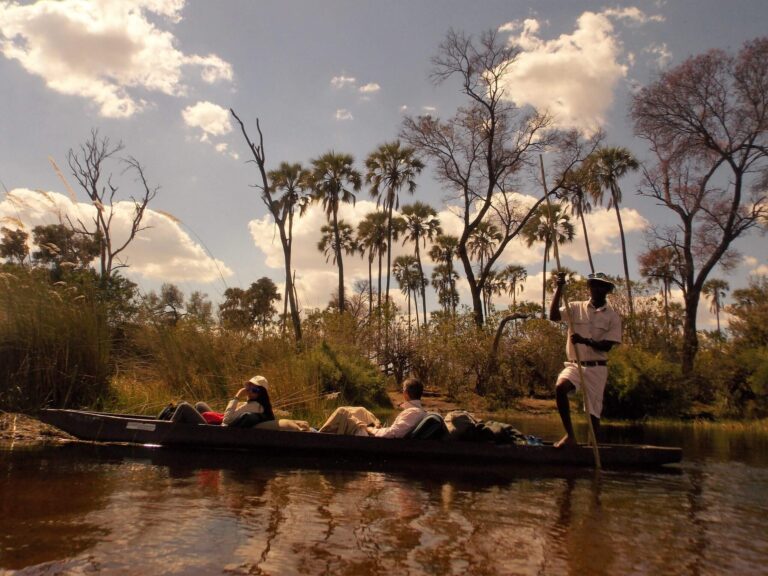
Mokoro safaris: In regions with permanent waterways, mokoro excursions remain possible throughout the dry season. These quiet journeys provide a different perspective on the landscape, moving slowly through channels that continue to support birdlife and aquatic species long after seasonal floods have receded.
Key Dry Season Changes in Botswana and How They Shape the Experience
| Dry Season Change | Environmental Impact | How It Shapes the Safari Experience |
| Reduced rainfall | No new surface water; ecosystems rely on permanent rivers and wetlands | Wildlife becomes easier to predict and observe |
| Drying of pans and floodplains | Seasonal water sources disappear | Animals concentrate around fewer locations |
| Shorter grasses and thinner vegetation | Increased visibility across plains and woodland | Easier wildlife spotting and clearer photography |
| Concentration around water | Natural movement corridors form | Longer, more behaviour-focused sightings |
| Cooler early-season temperatures | Increased daytime animal activity | More active mornings and afternoons |
| Warmer late-season conditions | Greater reliance on shade and water | Wildlife lingers near rivers and channels |
| Firmer ground and dry roads | Improved accessibility to remote areas | Smoother travel and broader range of exploration |
| Clear skies and low humidity | Strong light and minimal haze | Better visibility and consistent conditions |
| Dustier conditions later in season | Tracks and signs preserved in sand | Improved tracking for walking safaris |
| Leaner vegetation | Landscapes feel more open and expansive | Greater sense of scale and clarity |
Botswana Dry Season Month by Month
Unlike some destinations where seasons change abruptly, Botswana’s dry season unfolds gradually. There is no single moment when the bush “switches” from green to dry; instead, the transformation happens in stages, shaped by the natural water loss, temperature shifts, and animal response. When you visit will dictate what side of the dry season you will experience.
Early Dry Season: May – July
In the early dry season, typically from May to July, the landscape is still in transition, making safaris a gentle introduction to the dry season’s rhythms.
The rain has largely stopped, but the landscape has not yet fully dried out. Seasonal pans may still hold water, and vegetation remains relatively intact, especially in areas that received good rainfall.
Wildlife movement begins to change during this stage, but animals can still range fairly widely. Grazing is good, and water is available in more places, creating a sense of balance between abundance and restraint. Temperatures are cooler, particularly at night and in the early morning, and the bush feels calm and settled.
Mid Dry Season: August – September
By the middle of the dry season, the effects of limited rainfall become more pronounced. Seasonal water sources have largely dried up, and wildlife movement becomes increasingly centred on permanent rivers, channels, and wetlands.
Vegetation thins noticeably, opening up the landscape and improving visibility. Grazing pressure increases, and animals return repeatedly to the same areas, establishing clear movement patterns. Predator–prey interactions become easier to observe as cover diminishes and activity increases during cooler parts of the day.
This stage is often characterised by consistency and predictability. The bush feels open and readable, and wildlife behaviour follows clear, established routines.
Late Dry Season: October
By October, the dry season is at its most pronounced. Water availability dictates almost every aspect of daily life for wildlife. The environment feels stark but highly legible – tracks are clear, sightlines are long, and the relationship between animals and their surroundings is easier to observe. While temperatures rise toward the end of the season, the clarity and intensity of the experience remain defining characteristics.
What to Pack for a Botswana Dry Season Safari?
So with this in mind, what exactly should you pack for a Botswana dry season safari?
Well, packing for the dry season means preparing for contrast. Days can be warm, while mornings and evenings – especially early in the season – can be cold. Lightweight, neutral-coloured clothing works well during the day, paired with warmer layers for early starts and evenings.
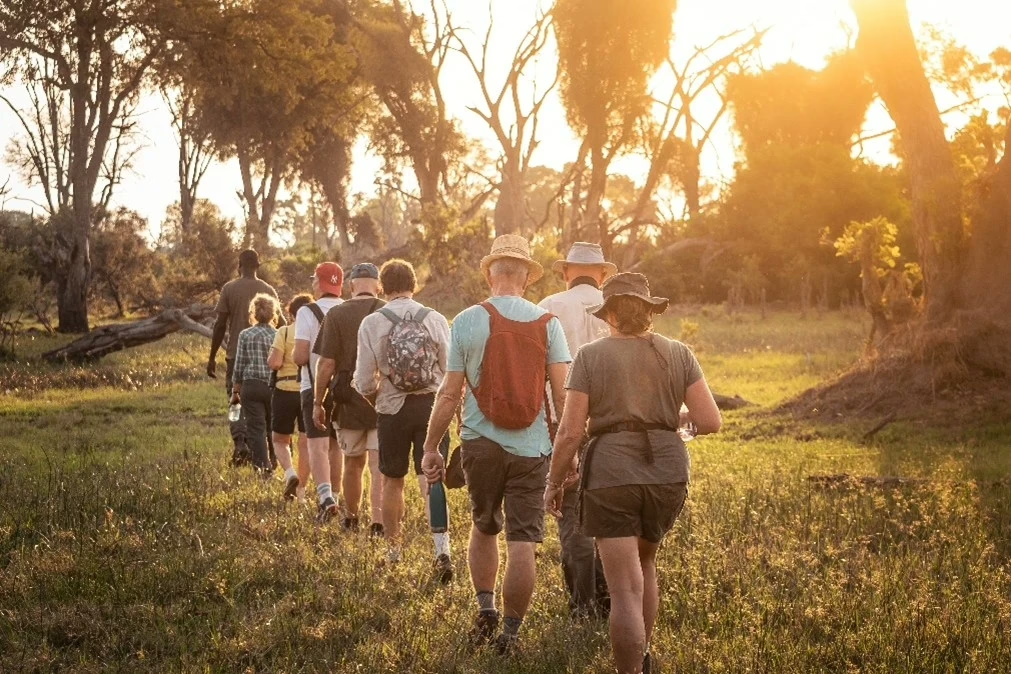
Closed, comfortable footwear is important, particularly for walking activities. A wide-brim hat, sunglasses, and a light scarf or buff can help with sun exposure and dust. Practical items such as a refillable water bottle, sunscreen, and lip balm quickly become daily essentials.
Travelling During the Botswana Dry Season
Whether it be the dry season or the green season, a Botswana safari provides a very different, authentic experience of the bush, depending on when you visit
While there is no better or worse time to visit, choosing when to visit Botswana ultimately comes down to what you want to take from the experience. Whether that is understanding wildlife behaviour in detail, witnessing the landscape at its most dynamic, or simply spending time immersed in a particular rhythm of the bush, seasonality helps shape your trip.
Looking to experience the dry season for yourself? Why not enquire with our team today for a tailored experience and pricing quote?